Personal pronouns - Order of pronouns
1 General
As has been mentioned,
object pronouns
come before the
verb
in a
simple tense
or before the
auxiliary
verb
avoir or être in a
compound tense
:
Tu connais Paul? - Oui, je le
connais
Do you know Paul? - Yes, I know him
As-tu trouvé tes lunettes? - Oui, je les
ai trouvées
Did you find your glasses? - Yes, I did find them
2 Two pronouns
In cases where there are two
pronouns
the order is as follows:
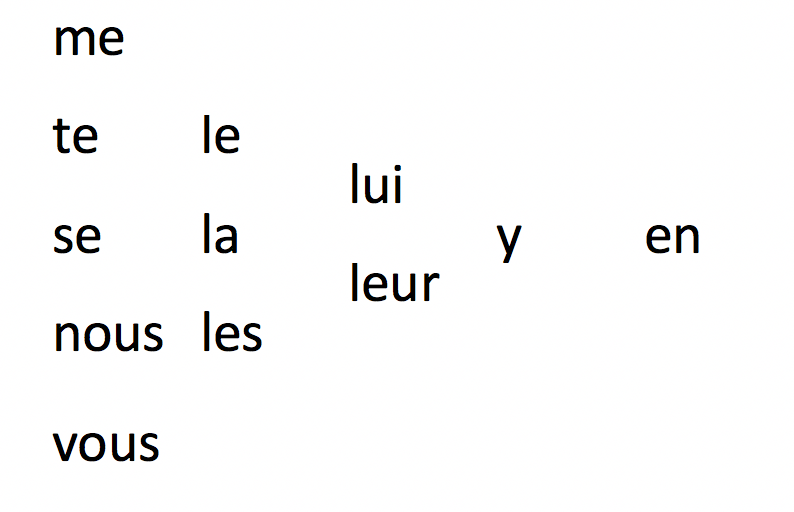 Fig.1 Diagram showing the order of pronouns
This order is the same for
affirmative
sentences:
Elle me les a rendus
She gave them back to me
Ils nous en prêteront
They will lend us some
Il y en a encore
There are more of them
negative
sentences:
Je ne la lui ai pas envoyée
I didn't send it to him / her
Ils ne nous en prêteront pas
They won't lend us any
Il n'y en a plus
There aren't more of them
and all types of questions, including
negative
questions:
Me les a-t-elle rendus?
Did she give them back to me?
Nous en prêteront-ils?
Will they lend us some?
Ne la lui ai-je pas envoyée?
Didn't I send it to him / her?
Y en a-t-il encore?
Are there any more of them?
Est-ce que tu as vu Paul au cinéma? Non, je ne l’y ai pas vu.
Did you see Paul in the cinema? No, I didn’t see him there.
Et les 2000 euros qu’ils lui ont prêtés pour acheter une voiture. Est-ce qu’elle les leur a remboursés?
And the 2000 euros they lent her to buy a car? Has she paid it back to them?
Il volait de l’argent à sa propre mère? Oui, il lui en volait.
He was stealing money from his own mother? Yes, he was stealing it from her.
Il est important que les enfants sachent lire. Il faut les y encourager le plus tôt possible.
It is important that children know how to read. We must encourage them to do so as soon as possible.
Tu devrais parler à Marie de tes idées. Oui, je lui en parlerai demain.
You ought to talk to Marie about your ideas. Yes, I’ll talk to her about them tomorrow.
3 Use before infinitives
When a
verb
is used with an
infinitive
, the
pronouns
tend to come directly
before the infinitive:
Je compte la leur présenter
I'm planning on introducing her to them
J'aurais bien aimé l'avoir
rencontrée
I really would have liked to have met her
4 Use in imperative
4.1 Affirmative imperative
In the
affirmative
imperative
, pronouns come after the
verb
and are linked
to it by a hyphen. Note that moi and toi
are used instead of me and te:
Tu veux du chocolat? Prends-en!
Do you want some chocolate? Take some!
Ce sera bientôt l'anniversaire de ta mère. Envoie-lui
une carte!
It will soon be your mother's birthday. Send her a card!
Tu as trouvé ses clefs? Donne-les-lui!
Have you found his / her keys? Give them to him / her!
Tu as des photos? Montre-les-moi!
Do you have some photos? Show them to me!
Regarde-moi quand je te parle!
Look at me when I talk to you!
Nous n’avons pas assez d’assiettes pour la soirée. Apportez-nous-en quelques-unes.
We don’t have enough plates for the party. Bring us a few.
Il conduit trop vite. Dites-lui de ralentir.
He’s driving too fast. Tell him to slow down.
Elle a beaucoup d’expérience dans ce domaine. Ecoute-la.
She has a lot of experience in this area. Listen to her.
Paul n’a rien à boire. Donne-lui un verre de vin.
Paul doesn’t have a drink. Give him a glass of wine.
4.2 Negative imperative
In the
negative
imperative
, however, pronouns come before the
verb
. Moi
and toi revert to me and
te:
Ne les lui donne pas!
Don't give them to him / her!
Ne me les montre pas!
Don't show them to me!
Ne m'en donne pas!
Don't give me any!
Ne leur en achète
pas!
Don't buy them any!
Ne me regarde pas comme ça. Ce n’est pas de ma faute!
Don’t look at me like that. It’s not my fault!
Elle a une commission à faire pour sa mère, alors ne lui téléphone pas tout de suite.
She’s got an errand to do for her mother, so don’t phone her straightaway.
Ne le conduis pas au bureau. Il a besoin d’exercice!
Don’t drive him to the office. He needs the exercise!
Martha a de la température. Ne l’envoyons pas à l’école aujourd’hui.
Martha has a temperature. Let’s not send her to school today.
Il roule déjà assez vite. Ne lui dis pas d’accélérer.
He’s driving fast enough as it is. Don’t tell him to go any faster.